




注;本店所有产品均为特殊产品, 市场价格一直波动 ,具体以客服报价为准,因产品为全新产品,图片并非实拍,下单前请跟客服确认型号和产品,价格等详细信息,网站内二手,全新均有销售,具体请联系客服沟通。
我司能直接从境外进货、能够提供不同国别、厂商的设备以及备件、解决您多处寻找的麻烦或对产品质量问题的担心等、在价格上我们有很大的优势、产品详细信息、竭诚欢迎您来电查询或使用E-mail查询!
分散控制系统(DCS)详细介绍
1. 系统概述
分散控制系统(DCS, Distributed Control System)是一种工业自动化控制系统,旨在实现大规模工业过程的集中监控、分散控制和管理。它将传统的控制室的功能分散到多个控制器上,每个控制器负责监控和控制特定的工业过程或设备。这种分散化的结构提高了系统的可靠性和灵活性,使其能够适应复杂的工业环境和不断变化的需求。
2. 基本组成与结构
分散控制系统通常由以下几个基本组成部分构成:
过程控制站:负责实时采集和处理现场信号,执行控制算法,生成控制输出。
操作员站:用于人机交互,显示过程状态、生成操作指令等。
数据通信网络:连接各个站点,实现数据和信息的高速传输。
工程师站:用于系统配置、调试和维护。
电源和辅助设备:确保系统稳定运行。
3. 工作原理
分散控制系统的工作原理基于分散控制、集中操作和分级管理的原则。每个过程控制站根据预先设定的控制算法和实时采集的数据,独立地计算控制输出,直接控制工业过程。操作员站通过数据通信网络获取过程信息,并向过程控制站发送操作指令。工程师站则负责系统的配置、调试和维护工作。
4. 核心特点
分散控制系统的核心特点包括:
分散性:控制功能分散到多个控制器上,提高系统的可靠性。
开放性:支持多种通信协议和标准,易于与其他系统集成。
可扩展性:可以根据需要增加或减少控制器和操作员站,适应不同规模的工业过程。
灵活性:支持多种控制策略和算法,适应不同的控制需求。
5. 应用领域
分散控制系统广泛应用于石油、化工、电力、冶金、制药、水处理等工业领域。在这些领域中,DCS能够实现对复杂工业过程的***控制和管理,提高生产效率和产品质量。
6. 优点与挑战
分散控制系统的优点包括:
提高可靠性:分散化结构减少了单点故障的风险。
易于维护:模块化设计使得维护更加方便。
灵活性强:能够适应不同的工业环境和控制需求。
然而,分散控制系统也面临一些挑战:
通信复杂性:多个控制器和站点之间的通信需要可靠的网络支持。
安全性风险:网络安全问题日益突出,需要采取***防护措施。
7. 发展趋势
随着工业自动化技术的不断发展,分散控制系统也在不断进步。未来的发展趋势包括:
智能化:利用人工智能技术优化控制策略和算法,提高控制精度和效率。
网络化:采用更高速、更可靠的数据通信网络技术,实现更加的信息传输和处理。
集成化:与其他工业自动化系统(如MES、ERP等)实现更深层次的集成和协同工作。
--
DCS和PLC之间有什么不同?
1、从发展的方面来说:
DCS从传统的仪表盘监控系统发展而来。因此,DCS从先天性来说较为侧重仪表的控制,比如我们使用的YOKOGAWACS3000DCS系统甚至没有PID数量的限制(PID,比例微分积分算法,是调节阀、变频器闭环控制的标准算法,通常PID的数量决定了可以使用的调节阀数量)。
PLC从传统的继电器回路发展而来,最初的PLC甚至没有模拟量的处理能力,因此,PLC从开始就强调的是逻辑运算能力。
2、从系统的可扩展性和兼容性的方面来说:
市场上控制类产品繁多,无论DCS还是PLC,均有很多厂商在生产和销售。对于PLC系统来说,一般没有或很少有扩展的需求,因为PLC系统一般针对于设备来使用。一般来讲,PLC也很少有兼容性的要求,比如两个或以上的系统要求资源共享,对PLC来讲也是很困难的事。而且PLC一般都采用专用的网络结构,比如西门子的MPI总线性网络,甚至增加一台操作员站都不容易或成本很高。
DCS在发展的过程中也是各厂家自成体系,但大部分的DCS系统,比如横河YOKOGAWA、霍尼维尔、ABB等等,虽说系统内部(过程级)的通讯协议不尽相同,但操作级的网络平台不约而同的选择了以太网络,采用标准或变形的TCP/IP协议。这样就提供了很方便的可扩展能力。在这种网络中,控制器、计算机均作为一个节点存在,只要网络到达的地方,就可以随意增减节点数量和布置节点位置。另外,基于windows系统的OPC、DDE等开放协议,各系统也可很方便的通讯,以实现资源共享。
--
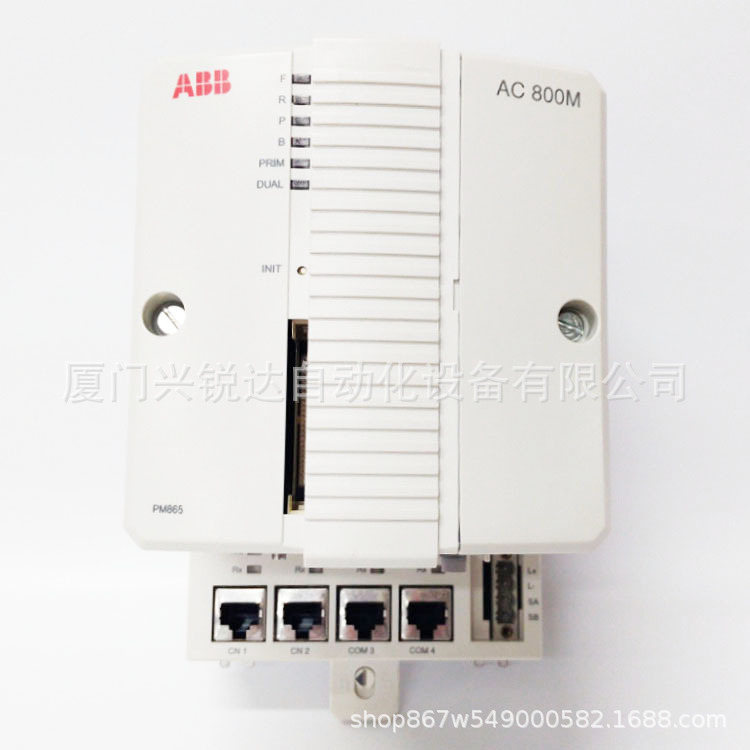
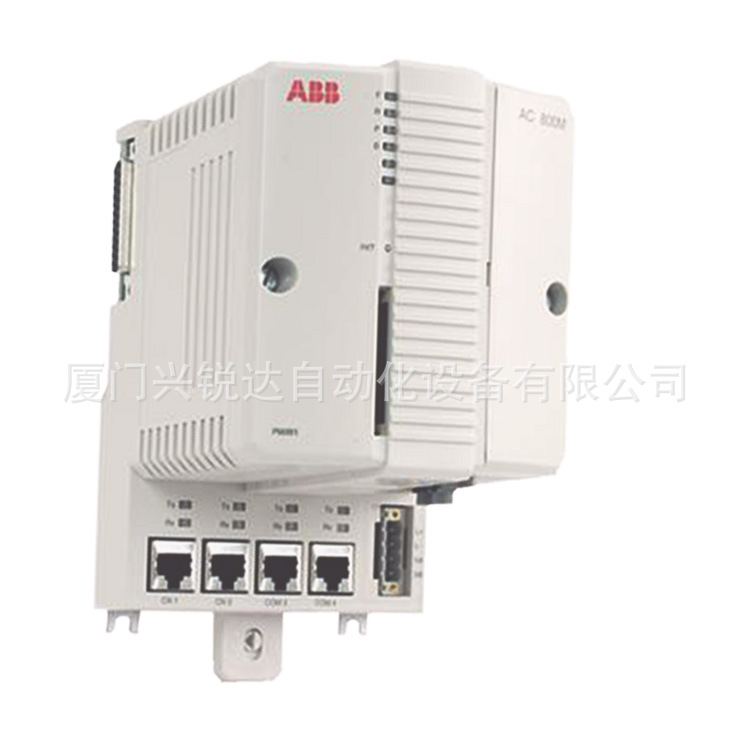
PM864A CPU处理器模块产品详情:
PM864A 是一款CPU处理器模块,通常用于ABB的自动化控制系统中。这个处理器模块是 800xA控制系统的一部分,用于实时控制和监控工业过程。以下是关于 PM864A CPU处理器模块的一些可能特点和功能:
实时控制: PM864A 处理器模块设计用于实时控制和监控工业过程,包括生产线、设备和机器。
处理性能: 该模块通常配备高性能的处理器,以处理复杂的控制算法和实时数据。
通信接口: PM864A 拥有多种通信接口,包括以太网、串行通信和现场总线,以便与其他控制设备和传感器进行数据交换和通信。
扩展性: 模块通常具有可扩展性,允许用户根据需要添加附加模块或接口卡,以满足特定应用的要求。
数据处理: 处理器模块可以执行各种数据处理任务,包括数据采集、分析、记录和报警处理。
安全性: PM864A的控制系统通常具有安全特性,以确保工业过程的安全性,包括用户身份验证、访问控制和数据加密。
可编程性: 用户可以使用相应的工程工具对处理器模块进行编程和配置,以满足具体的控制逻辑和应用需求。
工程工具: PM864A通常提供用于配置和编程的工程工具,以帮助用户轻松地设置和管理控制系统。
--
PM866A-2/3BSE081230R1 处理器模块产品详情:
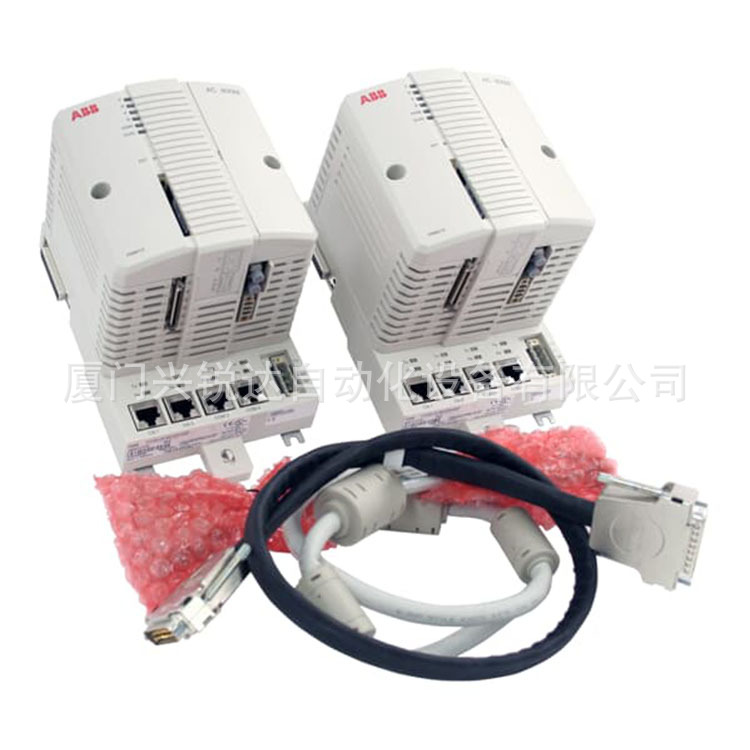
PM866A-2(也称为PM866A-2/3BSE081230R1)是一种处理器模块,通常用于工业自动化和控制系统中。这个模块是ABB的AC 800M系列控制器的一部分,用于执行控制和监控任务。以下是有关ABB PM866A-2处理器模块的基本信息:
型号: PM866A-2
编码: 3BSE081230R1
这个处理器模块通常具有以下特性和规格:
处理能力: PM866A-2是一个高性能的处理器模块,用于执行复杂的控制算法和逻辑。它通常用于大型工业自动化系统中。
内存: 模块通常具有足够的内存用于存储控制程序和数据。
通信接口: PM866A-2通常支持多种通信接口,包括以太网、串行通信等,以便与其他设备和系统进行数据交换。
编程: 通常需要对处理器模块进行编程,以定义控制逻辑和操作。ABB的控制器通常使用专门的编程工具,如Control Builder M,来创建和编辑控制程序。
可扩展性: 这种类型的处理器模块通常支持可扩展性,允许用户根据需要添加输入/输出模块和其他扩展模块。
应用领域: PM866A-2通常在各种工业应用中使用,包括制造业、过程控制、电力系统等领域。
安全性: 控制器通常具有安全功能,以确保系统和操作的安全性。
--
PM858 3BSE093350R1 是一种CPU控制器。CPU控制器通常用于工业自动化和控制系统中,作为处理单元,负责处理和执行各种控制任务和逻辑运算。
以下是 PM858 CPU控制器通常具有的一些特点和功能:
处理能力: PM858 CPU控制有强大的处理能力,能够地执行复杂的控制算法和逻辑运算。
多任务处理: 控制器通常支持多任务处理,可以同时处理多个控制任务和进程。
通信接口: PM858 CPU控制器通常配备多种通信接口,用于与其他设备和系统进行数据交换和集成。
可编程性: 控制器可以通过编程进行配置和定制,以适应不同应用和控制要求。
可靠性: 控制器通常具有高可靠性和稳定性,以确保系统的稳定运行和数据完整性。
数据存储: 控制器可能具有数据存储功能,用于记录历史数据和事件信息。
PM858 CPU控制器在工业自动化系统中扮演着关键的角色,它们用于控制和监控各种工业过程,如生产线控制、设备运行监测、数据采集和处理等。这些控制器可广泛应用于制造业、能源生产、水处理、交通系统等各个领域。
Decentralized Control System (DCS) Details
1. System Overview
Distributed Control System (DCS, Distributed Control System) is an industrial automation control system designed to achieve centralized monitoring, decentralized control and management of large-scale industrial processes. It decentralizes the functions of a traditional central control room to multiple controllers, each of which is responsible for monitoring and controlling a specific industrial process or device. This decentralized structure improves the reliability and flexibility of the system, enabling it to adapt to complex industrial environments and changing demands.
2. Basic Components and Structure
A decentralized control system usually consists of the following basic components:
Process control station: responsible for real-time acquisition and processing of field signals, execution of control algorithms, and generation of control output.
Operator station: Used for human-computer interaction, displaying process status, generating operation commands, etc.
Data communication network: connects each station to realize high-speed transmission of data and information.
Engineer station: used for system configuration, debugging and maintenance.
Power supply and auxiliary equipment: to ensure stable operation of the system.
3. Working Principle
The working principle of the decentralized control system is based on the principles of decentralized control, centralized operation and hierarchical management. Each process control station calculates the control output independently according to the pre-set control algorithm and real-time collected data to directly control the industrial process. The operator station acquires process information through the data communication network and sends operating commands to the process control station. The engineer station, on the other hand, is responsible for the configuration, commissioning and maintenance of the system.
4. Core features
The core features of a decentralized control system include:
Decentralization: control functions are decentralized to multiple controllers to improve system reliability.
Openness: supports a variety of communication protocols and standards, easy to integrate with other systems.
Scalability: controllers and operator stations can be increased or decreased as needed to adapt to different scales of industrial processes.
Flexibility: support a variety of control strategies and algorithms to adapt to different control needs.
5. Application fields
Decentralized control system is widely used in petroleum, chemical, electric power, metallurgy, pharmaceutical, water treatment and other industrial fields. In these fields, DCS can realize the *** control and management of complex industrial processes, and improve production efficiency and product quality.
6 Advantages and challenges
Advantages of decentralized control systems include:
Improved reliability: Decentralized structure reduces the risk of a single point of failure.
Easy maintenance: Modular design makes maintenance easier.
Flexibility: The ability to adapt to different industrial environments and control needs.
However, decentralized control systems also face a number of challenges:
Communication complexity: Communication between multiple controllers and sites requires efficient and reliable network support.
Security risks: network security is a growing concern and requires *** protection measures.
7. Development trends
As industrial automation technology continues to evolve, so do decentralized control systems. Future development trends include:
Intelligent: using artificial intelligence technology to optimize control strategies and algorithms to improve control accuracy and efficiency.
Networking: Adopting higher speed and more reliable data communication network technology to achieve more efficient information transmission and processing.
Integration: Achieve deeper integration and collaborative work with other industrial automation systems (e.g., MES, ERP, etc.).
--
What is the difference between DCS and PLC?
1. In terms of development:
DCS from the traditional instrument panel monitoring system development. Therefore, DCS from the innate more focused on instrumentation control, such as our use of YOKOGAWACS3000 DCS system does not even he the limitations of the number of PID (PID, Proportional Differential Integral algorithm, is a control valve, inverter closed-loop control of standard algorithms, usually the number of PID determines the number of regulating valves can be used).
PLC from the traditional relay loop development, the initial PLC does not even he analog processing capabilities, therefore, PLC from the beginning of the emphasis on the logic operation capabilities.
2, from the aspect of system scalability and compatibility:
A wide range of control products on the market, whether DCS or PLC, there are many manufacturers in production and sales. For PLC systems, there is generally no or very little need for expansion, because the PLC system is generally aimed at the device to use. Generally speaking, PLC also rarely he compatibility requirements, such as two or more systems require resource sharing, for PLC is also very difficult. And PLC generally use a dedicated network structure, such as Siemens MPI bus network, or even add an operator station is not easy or costly.
DCS in the development process is also each manufacturer's own system, but most of the DCS system, such as Yokogawa YOKOGAWA, Honeywell, ABB, etc., although the system's internal (process level) communication protocols are not the same, but the operating level of the network platform coincidentally chose the Ethernet network, the use of the standard or deformation of the TCP / IP protocol. This provides easy scalability. In this kind of network, the controller, computer all exist as a node, as long as the network reaches the place, you can arbitrarily increase or decrease the number of nodes and arrange the node position. In addition, based on the open protocols such as OPC and DDE of the windows system, the systems can also communicate easily to realize the sharing of resources.
--
PM864A CPU Processor Module Product Details:
The PM864A is a CPU processor module typically used in ABB's automation control systems. This processor module is part of the 800xA control system for real-time control and monitoring of industrial processes. Here are some possible features and functions about the PM864A CPU processor module:
Real-time control: The PM864A processor module is designed for real-time control and monitoring of industrial processes, including production lines, equipment and machines.
Processing Performance: The module is typically equipped with a high performance processor to handle complex control algorithms and real-time data.
Communication Interfaces: The PM864A has a variety of communication interfaces, including Ethernet, serial communications, and fieldbus, to exchange data and communicate with other control devices and sensors.
Expandability: Modules are typically expandable, allowing users to add additional modules or interface cards as needed to meet the requirements of a particular application.
Data Processing: Processor modules can perform a variety of data processing tasks, including data acquisition, analysis, logging, and alarm processing.
Security: The PM864A's control system typically has security features to ensure the safety of industrial processes, including user authentication, access control, and data encryption.
Programmability: Users can program and configure the processor module to meet specific control logic and application requirements using appropriate engineering tools.
Engineering Tools: The PM864A typically provides engineering tools for configuration and programming to help users easily set up and manage the control system.
--
PM866A-2/3BSE081230R1 Processor Module Product Details:
The PM866A-2 (also known as PM866A-2/3BSE081230R1) is a processor module typically used in industrial automation and control systems. This module is part of ABB's AC 800M series of controllers and is used to perform control and monitoring tasks. Below is basic information about the ABB PM866A-2 processor module:
Model Number: PM866A-2
Code: 3BSE081230R1
This processor module typically has the following features and specifications:
Processing Power: The PM866A-2 is a high performance processor module used to perform complex control algorithms and logic. It is typically used in large industrial automation systems.
Memory: The module usually has enough memory for storing control programs and data.
Communication Interfaces: The PM866A-2 typically supports a variety of communication interfaces, including Ethernet, serial communications, etc., to exchange data with other devices and systems.
Programming: The processor module usually needs to be programmed to define the control logic and operations ABB's controllers typically use specialized programming tools, such as Control Builder M, to create and edit control programs.
Expandability: This type of processor module typically supports expandability, allowing the user to add input/output modules and other expansion modules as needed.
Applications: The PM866A-2 is typically used in a variety of industrial applications, including manufacturing, process control, and power systems.
Safety: Controllers typically he safety features to ensure system and operational safety.
--
The PM858 3BSE093350R1 is a CPU controller.CPU controllers are typically used in industrial automation and control systems as a central processing unit responsible for processing and performing various control tasks and logic operations.
The following are some of the features and functions that the PM858 CPU controller typically has:
Processing Power: PM858 CPU controllers he powerful processing power to efficiently execute complex control algorithms and logic operations.
Multitasking: Controllers typically support multitasking and can handle multiple control tasks and processes simultaneously.
Communication Interfaces: PM858 CPU controllers are typically equipped with a variety of communication interfaces for data exchange and integration with other devices and systems.
Programmability: Controllers can be programmed to be configured and customized to suit different applications and control requirements.
Reliability: Controllers typically he high reliability and stability to ensure stable system operation and data integrity.
Data Storage: Controllers may he data storage capabilities for recording historical data and event information.
PM858 CPU controllers play a key role in industrial automation systems, where they are used to control and monitor a variety of industrial processes, such as production line control, equipment operation monitoring, data acquisition and processing. These controllers can be used in a wide range of applications in various fields such as manufacturing, energy production, water treatment, and transportation systems.
我们的优势
1、原装进口,价格实惠。一手货源直接从工厂和欧洲经销商拿货,省去中间环节,给您更具优势的实惠价格.
国外自建物流仓,发货拼箱报关全程把关,平台客服实时沟通,让您随时了解产品动态。
2、快速报价,不怕比价。不管是常规型号还是停产库存,我们都有具备完整的价目表,让您省时省力不等待。
发货及时,货期。国外自建物流仓,发货拼箱报关全程把关,平台客服实时沟通,让您随时了解产品动态
===============================================
我们会让时间证明,您的选择没有错! 我们会用诚心的服务换取您200%的满意
高品质低价格 现货提供 您的满意是我们为之努力的目标
第壹次合作客户,订货前可提供资质及近销售开出的票据扫描件以供查询。
售后问题:按照品牌所属生产厂家标准执行,保证售后服务,全新产品一年质保等
===============================================
全新现货,库存充足
质保一年,竭诚售后
本公司专注于DCS、PLC、机器人、大型伺服四大系统领域
主营产品各种模块/卡件,控制器,触摸屏,伺服驱动器
以下是我司【主营产品】,有需要可以发来帮您对比下价格哦!
购 前 须 知
一、店铺所有价格均不是实价,如需了解产品价格,请联系在线客服。
二、现货付款当日发货;期货从付款日起开始计算时间,货期不含节假日。
三、买家通过快递或物流签收货物后,若有异议,请在收到货物当天内提出。
1、下单前,买家需向卖家确认价格和货期;若买家单方面下单,则订单视为无效;
2、下单后,买家不得更改产品品牌,规格型号以及数量、单价等,因买家提供产品规格型号错误而造成错误订货的,卖家不负责更换货品、退货、退款等,也不承担因此造成的损失;
3、下单后,若无质量问题,不接受无理由退/换货、退款;
4、因此产品生产厂家停产、升级无3C、涨价、受限制造成无法订货,则订单取消,卖家不承担任何相关法律责任;
5、因自然天气、运输货运、政法原因等非卖方所能控制之客观因素导致货期延误,卖家不承担任何相关法律责任,由买卖双方协商订单是否依旧生效。
请各位买家知悉相关条款,如有异议,请咨询解决相关疑问。

库存型号:
| SA167 |
| 83SR04C-E |
| RDCU-02C |
| PFSA140 |
| NTAC-02 |
| SC560 |
| CI546 |
| SC510 |
| SC520 |
| SC560 |
| CI867K01 |
| EL3040 |
| CI546 |
| UFC719AE01 |
| PP836 |
| PU515A |
| AINT-14C |
| IEPAS02 |
| 216EA62 |
| 216NG63A |
| REX010 |

| 수입신고 1USD |
구매/결제대행 1CNY |
TT송금 1CNY |
|---|---|---|
| 6.76 CNY | 205.29 KRW | 0.145 USD |